
An unassuming white crystal has quietly shaped human history, fueling empires, dictating trade routes, and driving global economies for millennia. Table salt—chemically known as sodium chloride ($NaCl$)—has been an essential companion to human civilization since antiquity.
Salt is harvested primarily from two sources:
Sea Salt: Produced by evaporating saltwater from oceans, seas, and saline lakes.
Rock Salt (Halite): Extracted from underground mines, formed by the ancient dried-up beds of prehistoric seas.
In the ancient world, salt was so valuable that it was used to pay Roman soldiers—the root of the word salary (from the Latin salarium). Long before refrigeration, salt served as the primary method of preserving food, sparking trade expeditions, conflicts, and economic dominance.
Flavor Chemistry: How Salt Elevates Every Bite
Salt isn't just a seasoning that makes food taste "salty." It acts as a universal flavor enhancer, operating at a biochemical level to alter how we perceive taste and aroma:
Suppressing Bitterness: Sodium ions physically block bitter taste receptors on the tongue. By suppressing bitterness in leafy greens, coffee, or dark chocolate, salt allows underlying natural sweetness to shine through.
Amplifying Umami and Sweetness: Salt increases the sensitivity of other taste buds, amplifying rich, savory notes (umami) in meats, tomatoes, and mushrooms.
Unlocking Aromas: Salt binds to water molecules in food, driving volatile aromatic compounds into the air. Since flavor is heavily tied to our sense of smell, salt amplifies a dish's aroma before it even touches your tongue.
The Downside: Why Has Salt Earned a Bad Reputation?
Salt itself isn't inherently toxic; the issue lies in the overwhelming quantities consumed in modern Western diets.
The Biological Mechanism: When you consume excess sodium, your body retains water in the bloodstream to maintain proper electrolyte concentration. This extra fluid volume places constant pressure on arterial walls, resulting in hypertension (high blood pressure).
Long-Term Health Risks: Chronic high blood pressure strains blood vessels over time, significantly increasing the risk of heart attacks, strokes, kidney disease, and vision loss.
Where Is It Coming From? Most dietary sodium doesn't come from the salt shaker on your dinner table. Roughly 70% to 80% comes from processed and packaged foods—cured meats, aged cheeses, commercial sauces, canned soups, snacks, and pre-packaged baked goods—where salt is used as a cheap preservative and flavor mask.
Replacing Salt: Can Another Ingredient Take Its Place?
Chemically speaking, the only compound that mimics salt's direct saltiness is potassium chloride, which forms the base of low-sodium salt substitutes. However, it often leaves a slightly bitter, metallic aftertaste.
Culinary-wise, no single ingredient can replicate salt on its own. Instead, combining three distinct elements creates a rich, satisfying profile that tricks the palate into not missing the salt:
Acidity: Fresh lemon juice, citrus zest, balsamic vinegar, or apple cider vinegar stimulate saliva production and activate taste receptors much like salt does.
Natural Umami Boosters: Dried porcini mushrooms, slow-roasted tomatoes, black garlic, nutritional yeast, and deep caramelization from proper searing add savory depth.
Aromatic Herbs & Warm Spices: Rosemary, thyme, oregano, fresh ginger, cracked coriander, smoked paprika, and chili flakes stimulate the palate and build complex layers of flavor.
The Risks of Cutting Salt: Is Going Zero-Salt Safe?
It's critical to separate essential sodium from added table salt:
The Danger of Sodium Depletion (Hyponatremia): Sodium is a crucial electrolyte needed for nerve impulses, muscle function, and cellular fluid balance. A severe drop in blood sodium levels (hyponatremia) is a medical emergency that can cause confusion, nausea, muscle cramps, seizures, or dangerous brain swelling.
Is It Safe to Stop Adding Salt When Cooking? Absolutely. Whole, unprocessed foods—such as meats, fish, eggs, vegetables, legumes, and nuts—naturally contain enough sodium to meet your baseline physiological needs. Eliminating added salt in home cooking poses no threat to a healthy individual; it simply brings overall sodium intake back down to a balanced, sustainable range.
Three Flavor-Packed Recipes with Zero Added Salt
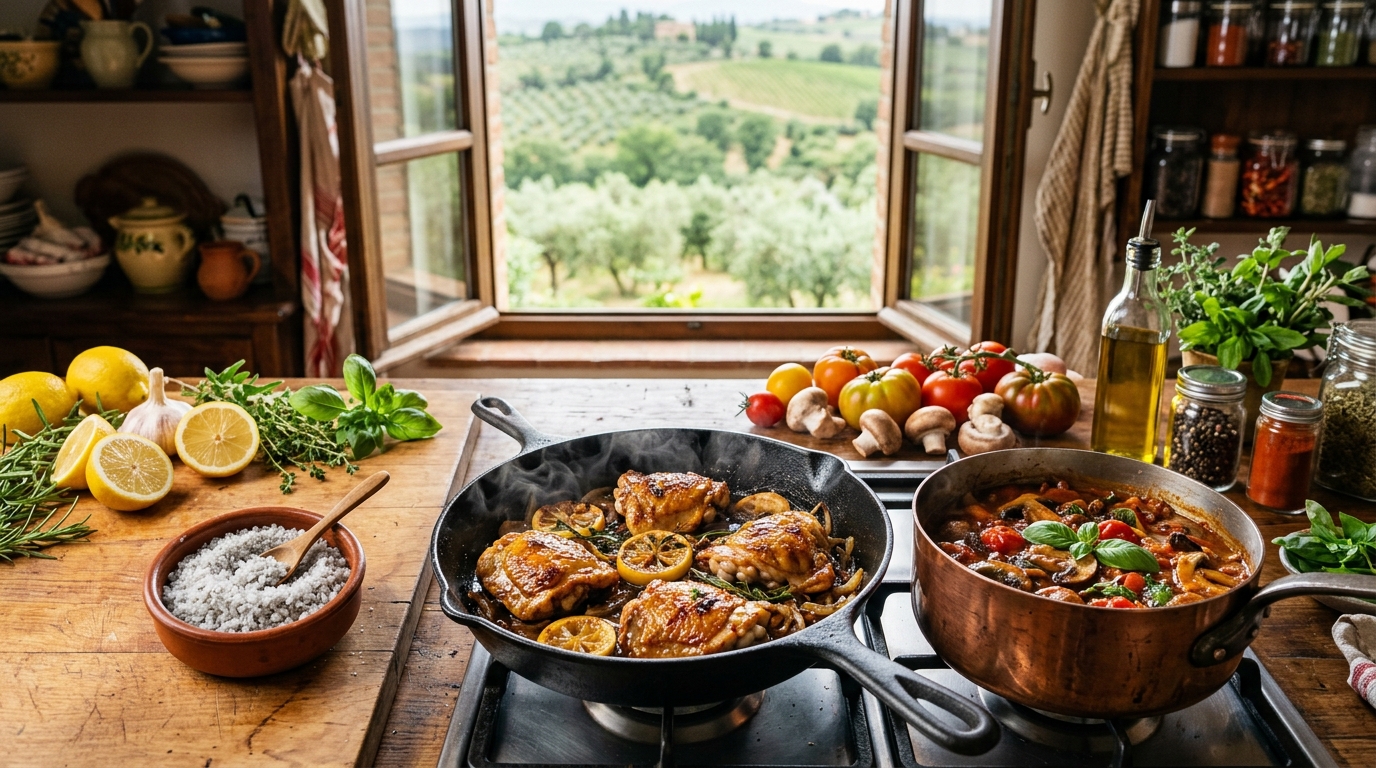
1. Citrus, Garlic & Herb Seared Chicken Thighs
Flavor Secret: Bright citrus acidity combined with sweet roasted garlic and woody herbs.
Ingredients: 1 lb boneless, skinless chicken thighs; zest and juice of 1 lemon; juice of 1/2 orange; 4 cloves garlic (minced); 1 tbsp olive oil; 1 tsp fresh thyme; 1 tsp chopped rosemary; 1/2 tsp freshly cracked black pepper; 1/2 tsp smoked paprika.
Preparation: Marinate the chicken in the citrus juices, garlic, herbs, spices, and olive oil for 30 minutes. Heat a heavy skillet or cast-iron pan over high heat and sear the chicken for 4–5 minutes per side until golden brown and cooked through. The natural sugars in the orange juice caramelize during searing, layering rich notes over the herbs to completely compensate for the lack of salt.
2. Deep Umami Mushroom & Roasted Tomato Ragu
Flavor Secret: Concentrated dried mushroom broth paired with sweet, slow-roasted tomatoes and balsamic vinegar.
Ingredients: 8 oz fresh mushrooms (cremini or portobello, sliced); 0.5 oz dried porcini mushrooms (soaked in 1 cup boiling water); 4 ripe plum tomatoes (quartered); 1 small red onion (diced); 3 cloves garlic (sliced); 1 tbsp quality balsamic vinegar; 2 tbsp olive oil; 1 tsp dried oregano.
Preparation: Roast the tomatoes at 400°F (200°C) for 20 minutes until soft and slightly charred. Sauté the onion, garlic, and fresh mushrooms in olive oil until golden. Chop the rehydrated porcini mushrooms and add them to the pan along with 1/2 cup of their strained soaking liquid, the roasted tomatoes, and oregano. Simmer for 15 minutes until reduced, then finish with a splash of balsamic vinegar. Serve over whole-wheat pasta or creamy polenta.
3. Seed-Crusted Salmon with Ginger-Lime Glaze
Flavor Secret: Crunchy toasted seed crust balanced by zesty ginger, chili heat, and fresh lime.
Ingredients: 2 salmon fillets; 1 tsp freshly grated ginger; zest and juice of 1 lime; 1 tsp honey; 1 tbsp toasted sesame seeds; 1 tbsp chopped sunflower seeds; 1/2 red chili (finely diced); 1 tbsp chopped fresh cilantro.
Preparation: Whisk the grated ginger, lime zest, lime juice, and honey in a small bowl, then brush it generously over the salmon fillets. In a separate dish, mix the sesame seeds, sunflower seeds, and diced chili, then press the mixture firmly onto the top of each fillet to form a crust. Bake at 375°F (190°C) for 12–14 minutes. Garnish with fresh cilantro before serving.