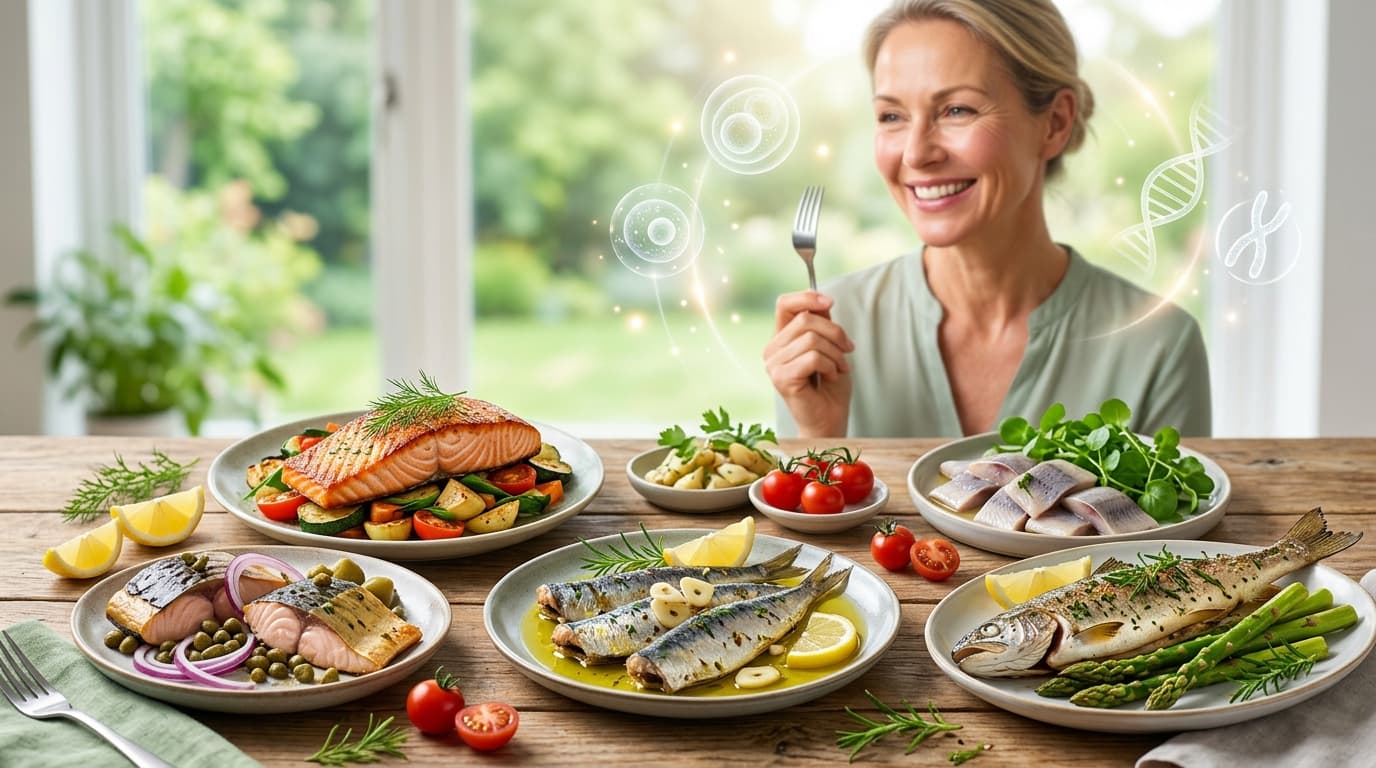
The Science of Sea-Based Anti-Aging
At the cellular level, the aging process is driven by two main culprits: oxidative stress (when free radicals outnumber your body's antioxidants, causing cellular damage) and "inflammaging" (silent, chronic inflammation).
The polyunsaturated Omega-3 fats packed into fatty fish act as critical building blocks for your cell membranes, keeping them flexible and efficient at absorbing nutrients. Beyond that, your body actually converts EPA and DHA into powerful anti-inflammatory lipids called resolvins and protectins. These actively shut down the inflammatory processes that accelerate the wear and tear on your skin, tissues, and cardiovascular system.
The Top 5 Fatty Fish for Anti-Aging
While there are plenty of other great fatty fish out there in both oceans and freshwater (like bluefin tuna or caviar), we’re going to focus on the five most accessible, nutrient-dense options backed by nutrition research:
Salmon: Packed with EPA and DHA, salmon also contains astaxanthin—a potent antioxidant that gives the fish its signature pink color and actually helps protect your skin from UV damage.
Sardines: These tiny fish sit at the bottom of the food chain, meaning they carry almost zero mercury or toxins. They are absolute powerhouses of Omega-3s, calcium, and Vitamin D.
Mackerel: This fish offers one of the highest concentrations of healthy fats per ounce, alongside a heavy hit of Vitamin B12 and selenium.
Herring: A cold-water favorite that is rich in high-quality fats and contains specific derivatives that protect brain function and your central nervous system.
Lake Trout: A fantastic freshwater option that boasts a rich fat profile, a mild texture, and incredibly low levels of environmental contaminants.
5 Ways to Prepare Them (And the Chemistry Behind the Recipes)
1. Lightly Seared Salmon with Olive Oil and Herbs
The Recipe: Marinate a salmon fillet in a light coating of olive oil, minced garlic, fresh dill, and a squeeze of lemon. Sear it on a hot grill pan for just 2 to 3 minutes per side, leaving the center pink and juicy.
The Chemistry: Polyunsaturated fats (like Omega-3s) are highly unstable and sensitive to high heat, which can cause them to oxidize (lipid peroxidation). A quick sear prevents the delicate double bonds in the DHA molecules from breaking apart. Meanwhile, the phenolic antioxidants in the olive oil and herbs act as a "chemical shield," physically stopping the fish's healthy fats from oxidizing in the hot pan.
2. Baked Fresh Sardines on a Bed of Garlic and Tomatoes
The Recipe: Place fresh, butterflied sardines on a baking sheet over sliced cherry tomatoes, garlic, olive oil, and sea salt. Bake at 350°F (180°C) for only 10 to 12 minutes.
The Chemistry: Tomatoes are loaded with lycopene, a fat-soluble antioxidant. The short baking time, combined with the natural fat dripping from the sardines, drastically boosts the lycopene's bioavailability (how easily your body can absorb it). At the same time, the Vitamin D and calcium from the soft sardine bones are absorbed much more efficiently by your gut when they are coated in this lipid-rich environment.
3. Cold-Smoked Mackerel Salad with Red Onion and Capers
The Recipe: Flake cold-smoked mackerel into a bowl, then toss in finely chopped red onion, capers, fresh lemon juice, and a little parsley. Eat it cold—no extra cooking required.
The Chemistry: The cold-smoking process preserves the fatty acids without exposing them to the destructive high temperatures of normal cooking. The sulforaphane and organosulfur compounds in the raw red onion work in perfect synergy with the selenium found in the mackerel. Together, they trigger glutathione peroxidase in your body, which is your cells' most powerful internal antioxidant enzyme.
4. Homemade Pickled Herring with Lemon and Watercress
The Recipe: Submerge fresh herring fillets in a brine made of lemon juice, a splash of apple cider vinegar, oil, mustard seeds, and sliced onions. Let it sit in the fridge for 24 hours, then serve over fresh leafy greens.
The Chemistry: The acidic marinade breaks down and unravels the proteins (a process called denaturation) without the use of any heat. This effectively "cooks" the fish while perfectly preserving the delicate chemical bonds of the EPA fatty acids, entirely bypassing the nutritional destruction that happens when fish is deep-fried.
5. Lake Trout Baked in Parchment Paper (En Papillote)
The Recipe: Lay a trout fillet over a bed of julienned zucchini, carrots, and fresh thyme inside a tightly folded parchment paper pouch. Add a splash of dry white wine and a drizzle of olive oil, seal the pouch, and bake at 375°F (190°C) for about 15 minutes.
The Chemistry: The "en papillote" cooking method creates a sealed, steamy micro-environment inside the paper. This steam acts as a barrier, preventing oxygen from making direct contact with the fish fat at high temperatures, which keeps the formation of aging free radicals to an absolute minimum. Additionally, the plant sterols from the veggies bind to the fish's fat molecules during digestion, helping to naturally manage your blood cholesterol levels.