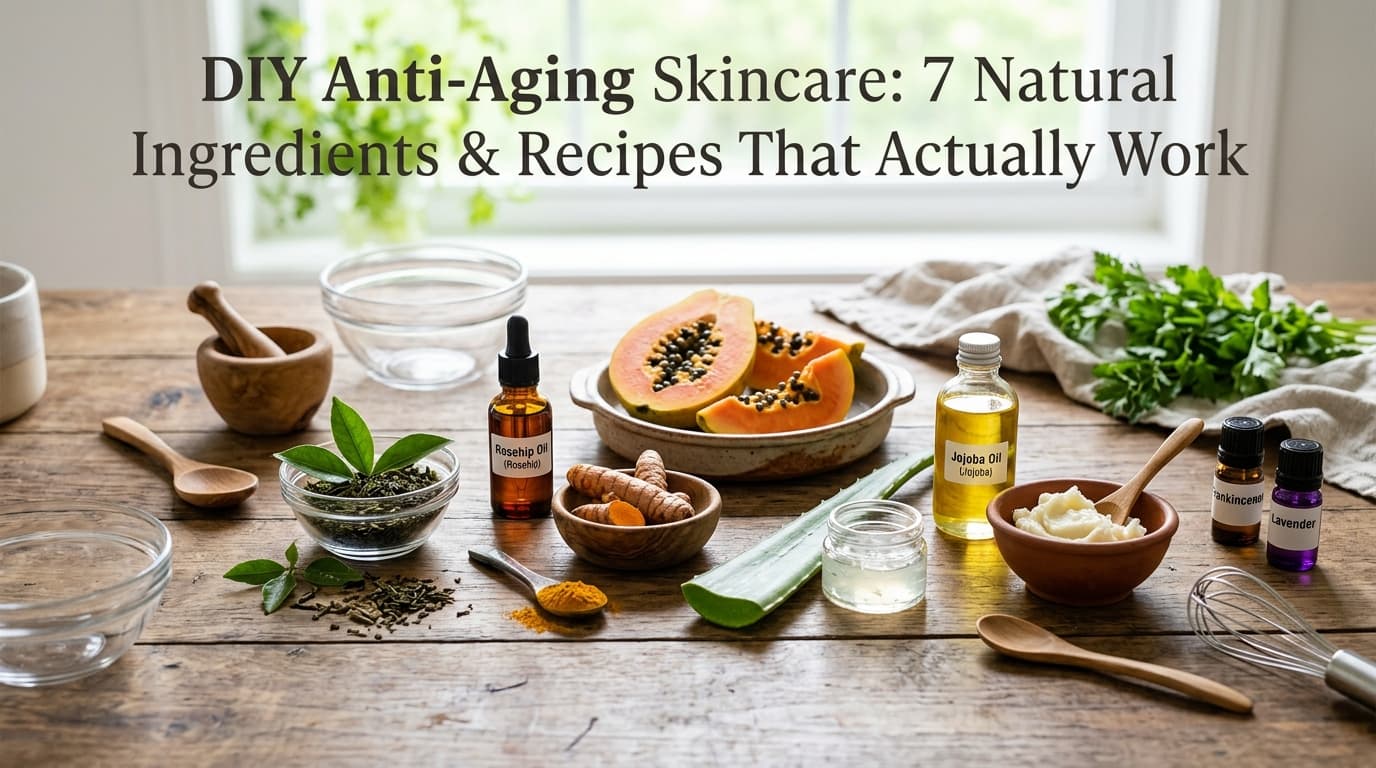
The anti-aging industry rakes in billions of dollars every year, but a lot of times, the secret to tight, glowing, and youthful skin is sitting right in our kitchens. The natural aging process of our skin happens mostly because of a drop in collagen production and oxidative damage from free radicals. Natural apothecary and making your own creams at home let you feed your skin vitamins, minerals, and antioxidants in their purest, most active forms—without any synthetic fragrances or preservatives. There are tons of products, fruits, herbs, and plants that can help with this process, but in this article, we’re going to focus on 7 main ingredients that are backed by both ancient beauty traditions and modern science.
7 Miracle Ingredients for Anti-Aging
Green Tea: Packed with powerful antioxidants that protect your skin from environmental and UV damage.
Rosehip Oil: A lightweight oil that holds an incredibly high concentration of natural vitamin A.
Papaya: A tropical fruit loaded with active enzymes that help shed dead cells and renew the skin.
Turmeric: A root spice with heavy-hitting anti-inflammatory and antioxidant properties.
Aloe Vera: A soothing, fleshy plant that deeply hydrates the skin and promotes healing.
Jojoba Oil: A unique plant oil with a chemical makeup almost identical to human sebum (our natural skin oil).
Shea Butter: Extracted from the nut of the shea tree, it's incredibly rich in nourishing vitamins and fatty acids.
Recipes & Chemistry: Natural Apothecary in Your Kitchen
Jojoba & Rosehip Ointment: Mix a tablespoon of jojoba oil with 5 drops of rosehip oil and massage it gently into the skin. How it works: The retinoic acid (a vitamin A derivative) in the oil binds to receptors in your skin cells, speeding up cell turnover and encouraging the production of new collagen fibers.
Green Tea & Shea Butter Cream: Melt 2 tablespoons of shea butter, mix in a tablespoon of concentrated green tea extract, and let it cool. How it works: The EGCG molecules in the green tea act as antioxidants by donating an electron to free radicals, stopping the oxidation chain reaction that damages the skin's cellular structure.
Papaya & Honey Mask: Mash a quarter of a fresh papaya, mix it with a teaspoon of honey, and leave it on your skin. How it works: Papain, the enzyme found in papaya, performs hydrolysis—a chemical process that breaks the peptide bonds between dead skin cells, giving you a gentle, natural chemical peel without any harsh physical scrubbing.
Turmeric & Aloe Vera Paste: Mix a tablespoon of natural aloe vera gel with just a tiny pinch of turmeric powder. How it works: The active compound, curcumin, blocks the activity of pro-inflammatory enzymes, preventing the rapid breakdown of elastin—the protein responsible for keeping your skin bouncy and elastic.
Aloe & Coconut Oil Lotion: Use a hand mixer to whip 2 tablespoons of solid coconut oil with a tablespoon of aloe vera gel until you get a fluffy cream. How it works: The fast mixing and shear force create an emulsion between the water in the aloe and the fat in the coconut. This combo forms a thin, hydrophobic layer on your skin that locks in moisture and keeps it from evaporating into the air.
Almond & Jojoba Restorative Cream: Grind raw almonds into a fine powder and mix with jojoba oil until it forms a paste. How it works: The vitamin E in the almonds acts as a shield for the cells' lipid membranes against oxidation, while the jojoba oil penetrates easily due to its low molecular weight, regulating oil production in your pores.
Shea & Papaya Night Cream: Melt a little shea butter and stir in a teaspoon of freshly squeezed papaya juice. How it works: The long-chain fatty acids in the shea butter act as a biochemical carrier, boosting the ability of the papaya's vitamins to penetrate deep into the dermis layer of your skin.