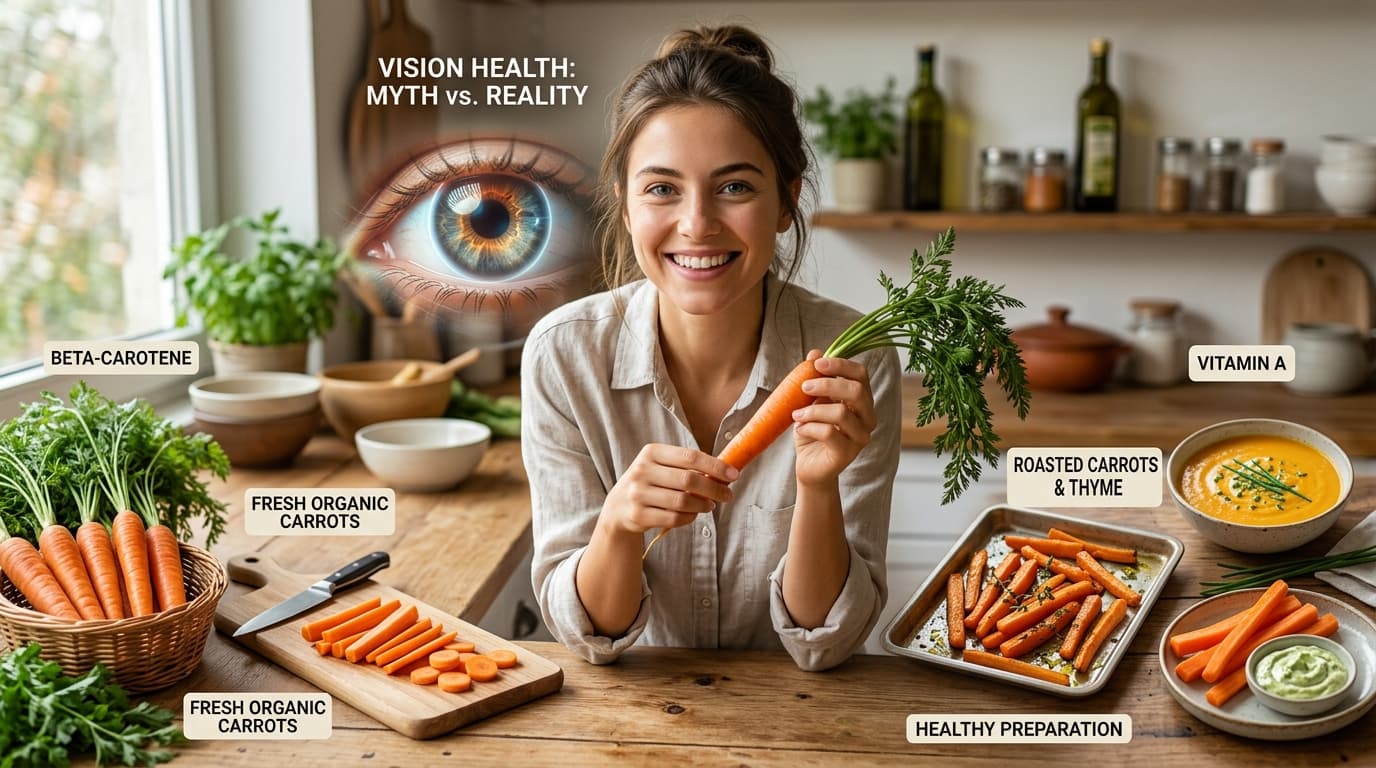
Do Carrots Really Improve Your Vision? Myth vs. Reality
To trace where this whole story started, you have to go back to World War II. The British Ministry of Information floated a story that Royal Air Force pilots were shooting down German bombers in total darkness thanks to a carrot-heavy diet. In reality, it was a clever cover story to keep the enemy from discovering that the British were secretly testing brand-new radar technology.
Does that mean carrots do nothing for your eyes? Not at all—but there is a big difference between supporting eye health and correcting your vision:
The Scientific Fact: Carrots are loaded with beta-carotene, a plant pigment your liver converts into Vitamin A. Vitamin A is essential for producing rhodopsin—a protein in the retina that allows your eyes to adjust to low light and translate light into signals your brain can read.
What Happens When You're Deficient? A severe Vitamin A deficiency can lead to night blindness and serious damage to the cornea. For someone running low on this vitamin, eating carrots will bring a noticeable improvement in vision.
The Catch: If your Vitamin A levels are already healthy, eating carrots by the crate won't give you night vision, fix nearsightedness, or replace your prescription glasses.
Long-Term Protection: Carrots also contain antioxidants like lutein and zeaxanthin. These compounds concentrate in the center of the retina, helping filter out damaging blue light and lowering the risk of age-related macular degeneration (AMD) and cataracts down the road.
The Nutritional Breakdown: What's Inside a Carrot?
Beyond their reputation for eye health, carrots are a nutrient powerhouse with a very low calorie footprint (around 41 calories per 100 grams):
Vitamin A (from carotenoids): A single medium carrot delivers over 100% of your daily recommended intake of Vitamin A. It’s vital not just for vision, but for immune function, cell growth, and skin health.
Vitamin K1 (phylloquinone): Essential for proper blood clotting and maintaining strong bones.
Vitamin C: A powerful antioxidant that sharpens immune defenses, boosts collagen production, and helps your body absorb iron.
B Vitamins (specifically B6 and biotin): Key players in converting food into energy, metabolizing proteins and fats, and keeping your nervous system running smoothly.
Potassium: An essential mineral that helps regulate blood pressure, balances fluid levels in cells, and supports heart and muscle function.
Dietary Fiber: Rich in both pectin (a soluble fiber) and insoluble fiber, carrots feed beneficial gut bacteria, slow down sugar absorption in the bloodstream, and keep you feeling full longer.
How Carrots Boost Whole-Body Health
Cholesterol Balance and Heart Health: The soluble fiber in carrots binds to bile acids in your digestive tract, helping your body flush them out. This forces your liver to draw cholesterol from the bloodstream to produce new bile acids, lowering "bad" LDL cholesterol over time.
Protection Against Chronic Illness: The carotenoids and unique plant compounds in carrots called polyacetylenes act as potent anti-inflammatories. Observational studies link regular carotenoid intake to a reduced risk of several cancers, including colon, stomach, and breast cancer.
Skin Health and Tissue Repair: Antioxidants in carrots shield skin cells from oxidative damage caused by free radicals and UV sun exposure.
Steady Blood Sugar: Despite their sweet flavor, carrots have a low glycemic index. Their mix of water, fiber, and complex carbs prevents sharp blood sugar spikes, making them a great option for managing diabetes.
Maximizing Absorption: Raw, Cooked, or with Fat?
Getting the absolute most out of your carrots comes down to two simple biological facts:
Light Cooking Unlocks Nutrients: Raw carrot cell walls are tough, trapping the beta-carotene inside. Lightly steaming, roasting, or cooking carrots softens those walls and increases beta-carotene bioavailability by 3 to 5 times compared to eating them raw.
Healthy Fat is Required: Vitamin A and beta-carotene are fat-soluble nutrients. For your gut to absorb them effectively, you need to eat carrots alongside a source of healthy fat (like olive oil, tahini, avocado, or nuts).
Pro-Tip: Boiling carrots in water for too long strips away water-soluble nutrients like Vitamin C and B vitamins. To get the best of both worlds, stick to quick roasting, light steaming, or eating raw shredded carrots tossed in an oil-based dressing.
5 Healthy Recipes to Keep Nutrients Intact
1. Raw Shredded Carrot Salad with Walnuts, Sesame, and Lemon-Olive Oil Dressing
A crisp, fresh salad that keeps raw Vitamin C intact, paired with healthy fats from walnuts and olive oil for optimal beta-carotene absorption.
Ingredients: 4 medium carrots (peeled and grated), 1/4 cup chopped walnuts, 1 tbsp whole sesame seeds, 2 tbsp extra virgin olive oil, juice of 1 whole lemon, 1 minced garlic clove, salt, and freshly cracked black pepper.
Instructions: Whisk the olive oil, lemon juice, garlic, salt, and pepper in a small bowl. Toss the grated carrots, walnuts, and sesame seeds together in a large bowl. Drizzle the dressing over the top, toss well, and serve immediately.
2. Roasted Carrot Fries with Thyme, Garlic, and Olive Oil
A quick roast softens the carrot cell walls to release carotenoids, while olive oil ensures your body absorbs them properly.
Ingredients: 6 whole carrots (washed and cut lengthwise into quarters like fries), 2 tbsp olive oil, 2 sprigs fresh thyme, 2 cloves minced garlic, coarse sea salt, and cracked black pepper.
Instructions: Preheat your oven to 400°F (200°C). In a bowl, toss the carrot sticks with olive oil, garlic, thyme leaves, salt, and pepper. Spread them out in a single layer on a parchment-lined baking sheet. Roast for 20 to 25 minutes, just until tender around the edges with a slight bite.
3. Silky Carrot, Ginger, and Coconut Milk Soup
The beauty of soup is that any nutrients that leach out during cooking stay right in the broth. Coconut milk provides the healthy fat needed to absorb the nutrient payload.
Ingredients: 2 lbs carrots (peeled and sliced into rounds), 1 medium yellow onion (diced), 2 garlic cloves, 1 inch fresh ginger root (grated), 1 tbsp olive oil, 1/2 cup canned coconut milk, 4 cups vegetable broth (or water), salt, pepper, and a pinch of nutmeg.
Instructions: Sauté the onion, garlic, and ginger in olive oil in a large pot until soft. Add the carrots and vegetable broth, then bring to a boil. Reduce heat, cover, and simmer for about 20 minutes until the carrots are fork-tender. Puree with an immersion blender until silky smooth, stir in the coconut milk and spices, and heat through for another 2 minutes.
4. Roasted Carrot & Whole Tahini Dip
A rich, flavorful spread combining lightly roasted carrots with sesame tahini—delivering a dose of carotenoids, fiber, iron, and healthy fats.
Ingredients: 4 carrots (roasted until tender), 3 tbsp whole sesame tahini, juice of half a lemon, 1 garlic clove, 2 tbsp cold water, a pinch of cumin, and salt to taste.
Instructions: Combine the roasted carrots, tahini, lemon juice, garlic, cumin, and salt in a food processor. Blend until smooth. If it's too thick, pulse in cold water a tablespoon at a time until you hit your desired texture.
5. Crunchy Carrot Sticks with Creamy Avocado-Yogurt Dip
A raw, crunchy snack where rich avocado fats complement fresh carrots for a fast nutrient boost.
Ingredients: 4 whole carrots (cut into thick sticks). For the dip: 1 ripe avocado, 3 tbsp plain goat yogurt (or non-dairy yogurt alternative), juice of half a lemon, salt to taste, and chopped chives for garnish.
Instructions: Mash the avocado in a bowl with a fork until smooth. Stir in the yogurt, lemon juice, and salt until creamy. Garnish with fresh chives and serve alongside crisp carrot sticks.